
How to Break a Narcissist Without Breaking Yourself
Key Takeaways
“How to break a narcissist” means breaking their control over your emotions, time, money, and choices—not seeking revenge, humiliation, or abuse.
Joint counseling with an abusive narcissist is often risky because therapy language can be turned into manipulation, blame, and backlash.
The most powerful strategy is cutting off narcissistic supply: attention, drama, admiration, fear, compliance, and emotional reactions.
Use gray rock communication, firm boundaries, reduced contact, written records, and legal advice when children, money, or court orders are involved.
Judge Anthony’s perspective on high-conflict family law focuses on protecting your legal position and mental health, not playing dangerous games that can backfire.
Understanding What It Really Means to “Break” a Narcissist
To break a narcissist, you break their access to your emotions, time, resources, and reactions. You are not trying to destroy a person. You are trying to break free from control, manipulation, lies, fear, and abusive behavior.
Narcissistic personality disorder is a legitimate mental health condition that can create significant challenges for the person living with it. Only a qualified mental health professional can diagnose narcissistic personality disorder based on the criteria outlined in the Diagnostic and Statistical Manual of Mental Disorders, known as the DSM-5-TR. The diagnostic and statistical manual was released in its DSM-5 form in 2013, with the DSM-5-TR text revision in 2022. Everyday narcissistic traits, narcissistic tendencies, covert narcissism, vulnerable narcissists, and a grandiose sense of self importance are not automatically the same as clinical NPD or other mental disorders.
People often describe someone with a narcissistic personality as charming and likable, which may make it easy to overlook harmful behavior. Narcissism is characterized by traits such as self-centeredness and a lack of empathy, making pleasant interactions more challenging and often leading to emotional manipulation. Narcissistic supply is essential for someone with NPD; it refers to the attention and admiration they require to maintain their self-esteem, similar to a drug addiction. When that supply disappears, the narcissist may feel rejection, criticism, anger, or injury and may try to provoke emotional reactions to regain power.

Safety First: Before You Try to Break Their Control
The first step is safety. If you are in immediate danger, or if the narcissist has threatened you, stalked you, controlled money, or harmed you physically, do not focus on clever psychological tactics. Focus on exit planning, secure housing, emergency help, restraining orders, and professional guidance.
Joint counseling with a narcissist is often not safe, as it can lead to backlash and manipulation from the narcissist, making it difficult for the other party to express their concerns. Abusers may weaponize therapy language after the session and use your honest concerns as more ammunition.
Build a strong support system quietly. That may include trusted family members, friends, a trauma-informed therapist, a domestic violence hotline, and a family law attorney familiar with high-conflict personalities. Maintaining an External Support System is crucial for individuals dealing with narcissistic dynamics. Judge Anthony’s work in high-conflict family law highlights the importance of planning, documentation, and protecting your position before conflict escalates. You can learn more through Judge Anthony and About Judge Anthony.
Create a private safety file with IDs, bank information, leases, court orders, insurance documents, passwords, and evidence. Store it offsite or in secure cloud storage with a hidden password.
Know Yourself Better Than the Narcissist Knows You
Sun Tzu’s “know yourself” idea matters here. A narcissistic person often studies your triggers: rejection, abandonment, money anxieties, fear of losing children, or being called “crazy.” List your top five triggers and recognize how the narcissist uses them.
Map the pattern. What happens before court dates, holidays, birthdays, new jobs, new partners, or 2026 graduation dates? Do 3 a.m. texts appear? Do narcissistic parents triangulate through kids? Does a “god bless” message hide blame or bait?
Keep a daily log with two columns:
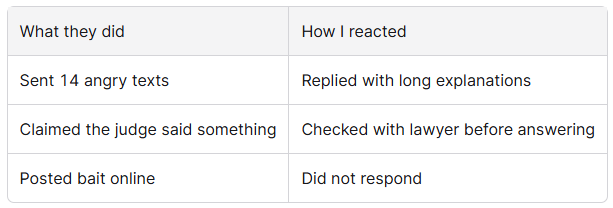
Practice new reactions privately. Deep breathing, yoga, meditation, and rehearsed neutral phrases can help you remain calm and avoid reacting emotionally when interacting with a narcissist.
Cut Off Narcissistic Supply Strategically
Narcissistic supply is to a narcissist what oxygen is to a fire. Without attention, admiration, drama, fear, compliance, and emotional reactions, narcissistic behavior loses fuel.
Emotional supply includes tears, shouting matches, instant replies, defensive essays, and trying to prove the truth in every conversation. Every time you over-explain, you hand the narcissist more ammunition. Reducing visible emotional reactions helps you stay grounded and protects your peace.
Practical supply includes money, housing, free labor, sexual access, rides, unpaid favors, and being their public cheerleader online. Create timelines to reduce these safely. For example, stop paying extra bills, decline last-minute favors, refuse middle-of-the-night arguments, and do not react when they post baiting content on Instagram.
Do this strategically. Do not violate court orders, custody agreements, or financial obligations. In 2026 custody or divorce cases, reckless moves can hurt the victim more than the narcissist.
Reduce Contact and Control the Conversation
Reducing communication with a narcissist can help minimize drama and emotional manipulation; using written communication instead of face-to-face interactions can be effective. Texts, email, and co-parenting apps create a record and reduce gaslighting.
No contact works when you are safe and have no shared children, business, property, or court obligations. Low contact works when you must communicate. Use tools such as OurFamilyWizard or TalkingParents for parenting logistics.
Control pacing. You do not need to answer non-urgent messages instantly. Try:
“I’ll review this and respond by tomorrow.”
“Please send schedule details in writing.”
“I disagree.”
“That’s not accurate.”
“I will only discuss the pickup time.”
Communicating via text or email for important arrangements can prevent gaslighting or misremembered agreements. Never ignore standing court-ordered communication requirements.
Master the Gray Rock Method and Emotional Detachment
The gray rock method involves keeping your responses neutral, brief, and unengaging to minimize drama and reduce the narcissist’s interest in provoking you. It is not the silent treatment. It is nervous-system protection.
Think of it like answering a boring work email from a stranger: neutral tone, short answers, no personal oversharing, no visible anger, no tears, and no debate. If they insult you, lie about what a judge supposedly said, or accuse you of being a bad parent, reply with: “I disagree,” “That’s not accurate,” or “Please keep this about the children’s schedule.”
You still feel your emotions. You process them later with safe people, a journal, a mental health professional, or your support system. Just do not hand the narcissist the emotional reaction they want.
Expect an extinction burst. When the narcissist realizes old tactics no longer work, they may get louder, angrier, or more dramatic. Stay calm, document, and do not abandon the boundary just because they test it.

Set Hard Boundaries and Say “No” Consistently
Setting clear boundaries is essential when dealing with someone who has narcissistic personality traits, as it helps protect your well-being and mental health. When managing a relationship with a narcissist, it is crucial to set clear boundaries and enforce them consistently to protect your well-being.
Choose 3–5 non-negotiable boundaries:
No surprise visits.
No phone calls after 9 p.m.
All child-related messages go through the app.
No discussing legal cases outside attorneys.
No insults during any conversation.
Setting firm boundaries and clearly defining consequences are important in interactions with a narcissist. When setting boundaries with a narcissist, it is important to communicate them clearly and enforce them consistently to ensure they are taken seriously. Say: “I’m not available for calls after 9 p.m. Text me instead.” If they call anyway, do not answer, or end the call and document it.
Start small. Say no to extra money, rides, or favors that drain you. A narcissist will test limits. Repeat the boundary instead of defending it.
Withhold Power: Information, Access, and Reactions
Narcissists thrive on insider knowledge. Keeping personal information private helps remove the narcissist’s ability to manipulate you.
Stop confiding in them about plans, fears, financial moves, new relationships, work problems, or family conflict. Use two-factor authentication, private banking, separate legal email, and secure passwords. Avoid announcing travel, purchases, or major life changes before necessary.
Use quiet wins. If the narcissist wins a motion in March 2026, do not break down in front of them. Regroup privately with your lawyer, therapist, and trusted people. Your reaction is not their reward.
Use Evidence and the Legal System to Your Advantage
Documentation is how you protect reality when someone tries to manipulate the facts. Documenting interactions is important for those concerned about manipulation or legal issues.
Keep a contemporaneous log with dates, times, and short factual notes: threats, no-shows, late pickups, financial sabotage, harassment, social media messages, and violations of boundaries. Save texts, emails, voicemails, and screenshots with visible timestamps. These may become exhibits in 2026–2027 hearings.
Use communication platforms that export records. Before confronting or threatening to expose the narcissist, speak with a qualified attorney in your state. Public exposure can trigger retaliation, smear campaigns, defamation threats, and legal problems.

When to Go No Contact—and When You Can’t
The concept of “no-contact” or low-contact techniques is useful for distancing oneself from a narcissist. True no contact means blocking phone and social media access, using a third party for essential messages, changing routines, and preparing for hoovering attempts such as sudden apologies, fake crises, or promises to change.
No contact is not always possible. If you share children, a business, property, or a small community, use structured contact. That means logistics only, written channels, limited time windows, and a focus on the children’s best interests.
Follow court orders exactly. Secretly blocking court-mandated communication can damage your legal standing. Before moving states or changing schools in 2026, seek legal advice so the narcissist cannot claim contempt or parental kidnapping.
Protect and Rebuild Yourself After Breaking Free
Maintaining a relationship with someone who has narcissistic personality traits can significantly affect your well-being and mental health, often leading to feelings of emotional drain and anxiety. People often describe interactions with narcissists as confusing, frustrating, and emotionally exhausting, which can lead to a diminished sense of self-worth over time.
Engaging with a narcissist can lead to symptoms of anxiety and depression, as well as unexplained physical ailments, highlighting the emotional toll of such relationships. Practicing self-care and building a support system can help you maintain your boundaries and cope with the challenges of interacting with a narcissist.
Accepting that a narcissist is unlikely to change can help reduce emotional exhaustion. Rebuild your life through sleep, nutrition, exercise, budgeting, solo accounts, credit repair, therapy, support groups, and education about NPD. Consider limiting new romantic relationships for 6–12 months while your self worth, self esteem, and healthy boundaries become stronger.
Healthy relationships should not require you to shrink, beg, or constantly prove reality. Breaking the narcissist’s hold means building a life where their opinion no longer controls your choices.
Frequently Asked Questions
Can you really “break” a narcissist permanently?
You usually cannot change a narcissist’s core personality without long-term therapy and genuine personal commitment. What you can break is their access to your emotions, finances, attention, and decisions. Focus on boundaries, not on testing whether they have changed.
Is it dangerous to try to expose a narcissist publicly?
Yes, it can be. Public posts, mass emails, or workplace confrontations may trigger retaliation, smear campaigns, and legal threats. If exposure is necessary, use formal channels, evidence, safeguarding professionals, and legal advice.
How long does it take for a narcissist to lose interest after I cut supply?
Timelines vary. Some move to a new target within weeks. Others linger for months or years, especially when children, property, or court cases keep contact alive. Consistency shortens the struggle; mixed signals extend it.
Should I tell a narcissist that they’re a narcissist?
Usually, no. Direct labels often trigger rage, denial, or counter-attacks like “You’re the narcissist.” Focus on behavior and consequences: “I won’t stay in conversations where I’m yelled at.”
Can someone with narcissistic traits ever change for the better?
Some people with traits, but not full narcissistic personality disorder, improve with honest feedback and long-term therapy from a mental health professional. Still, set limits based on what the person does consistently now, not on promises, guilt, or occasional good days.