
Why Do Narcissists Purposely Trigger You? (Reactive Abuse Explained)
Key Takeaways
Triggering is strategic, not accidental. When a narcissist provokes you, they’re doing it to gain power, secure narcissistic supply, and make you look like the “crazy” one. Your intense emotional reactions are normal responses to ongoing abuse—not proof that you’re the problem.
Reactive abuse flips the script. Narcissists deliberately push your buttons until you snap, then point to your reaction as evidence of your instability. This is a calculated move to rewrite the story so they become the victim and you become the bad guy.
Core motives include control, supply, and enjoyment. They want a big emotional response to feed their ego, they need to play the victim to avoid accountability, and some genuinely enjoy watching you suffer. Understanding these motives helps you stop blaming yourself.
Trauma bonds keep you hooked. The cycle of trigger, chaos, and “making it up to you” creates a powerful attachment that’s hard to break. This isn’t weakness—it’s psychology and neurobiology working against you.
You can protect yourself. Through boundaries, gray rock communication, documentation, and professional support (legal or therapeutic), you can break free from this cycle and reclaim your life.
If you’ve ever felt like you were losing your mind after an interaction with someone who seems to know exactly which buttons to push, you’re not alone. The question of why narcissists purposely trigger you has a clear answer: they do it to control you, extract emotional supply, and position themselves as the victim when you finally react.
Understanding this dynamic is the first step toward protecting yourself. Whether you’re dealing with a toxic person in a romantic relationship, a narcissistic parent, or a high-conflict co-parent, the patterns are remarkably similar—and so are the solutions.
What Is Reactive Abuse – And Why Does It Feel Like You’re the Problem?
Picture this: Your partner makes subtle digs at you for hours. They bring up your insecurities, dismiss your feelings, and respond to your concerns with cold silence. Finally, after being pushed to your breaking point, you yell. And suddenly, they’re calm. “See? This is what I deal with,” they say. “You’re the abusive one here.”
Sound familiar?
Reactive abuse occurs when a narcissist deliberately triggers you into reacting to their abuse, making you appear as the abuser instead. It’s a pattern where they provoke, you respond with an emotional outburst, and then they use your reaction as “evidence” that you’re unstable or abusive.
The abuse leading up to your reaction is often covert and hard to pinpoint:
Sarcasm disguised as humor
Stonewalling and the silent treatment
Jabs about your past mistakes or trauma
Subtle threats about custody, finances, or your reputation
Dismissing your achievements or feelings
Here’s what matters most: the term “reactive abuse” describes behavior in context, not your identity. There’s a fundamental difference between someone who systematically controls, degrades, and manipulates others over time, and a victim who finally snaps after relentless provocation.
This dynamic shows up everywhere—romantic relationships, toxic families, high-conflict co-parenting situations, and workplaces with narcissistic bosses who deliberately provoke employees, then cite “unprofessionalism” when they react.
You are not “crazy” for finally snapping. Narcissists often use a ‘bait and switch’ strategy to provoke emotional reactions, allowing them to blame you for your response while they maintain an innocent facade.

Why Do Narcissists Purposely Trigger You?
Deliberate triggering isn’t accidental—it’s strategic. It serves multiple overlapping motives that keep the narcissist in control and keep you off-balance.
The primary goal of emotional manipulation by narcissists is to gain control over their victims’ emotions, often by provoking reactions that they can then exploit. Narcissists thrive on power struggles and emotional reactions, and they often provoke their victims to elicit a response that they can use to manipulate the situation further.
Here are the main motives behind why narcissists purposely trigger you:
To get an emotional reaction (narcissistic supply)
To flip the blame and play the victim
To stay in control of the relationship
To deepen trauma bonds with “make up” gestures
Because they derive enjoyment and relief from your distress
Secondary motives include sabotaging your reputation through a smear campaign, setting you up for court or custody disputes, and exhausting you until you doubt your own reality.
This behavior aligns with patterns seen in narcissistic personality traits and, in more severe cases, Narcissistic Personality Disorder (NPD). Let’s break down each motive.
#1 They Want a Big Emotional Reaction (Narcissistic Supply)
Narcissists treat your emotions like fuel. Intense emotional responses validate a narcissist’s sense of importance and dominance in relationships. When they can make you cry, rage, beg, or explain yourself repeatedly, they feel powerful and alive.
Any intense emotional response—including anger, tears, or distress—serves as “negative supply,” confirming the narcissist is the central focus of attention. The more dramatic your reaction to a narcissist’s provocation, the more satisfaction they derive from it, as it serves as a source of narcissistic supply for them.
Common triggers they use include:
Bringing up a painful childhood event as a “joke”
Dismissing your achievements (“That’s not a big deal”)
Flirting openly in front of you
Being deliberately late to events that matter to you
Revisiting past arguments you thought were resolved
The “bait and switch” works like this: hours or days of undermining comments or coldness, followed by one final cruel remark that pushes you over the edge. They often remain eerily calm while you’re upset, using phrases like “See? This is what I deal with” or “You’re overreacting again.”
This plays directly into reactive abuse. They provoke, you explode, and suddenly your reaction becomes the “real problem” in the relationship.
#2 They Need You to Blame Them – So They Can Flip It and Play the Victim
Narcissists often push you until you finally call them out. They want you to say things like “You’re abusive” or “You’re selfish and cruel.”
Why? Because once confronted, they can instantly pivot.
Narcissists may play the victim by using DARVO: Deny, Attack, and Reverse Victim and Offender, after provoking someone. The script usually sounds like this:
“After everything I’ve been through, you attack me?”
“I can’t do anything right for you, can I?”
“You know how hard my childhood was, and you still treat me this way.”
Narcissists often induce guilt and play the victim to manipulate others, exaggerating or fabricating situations to gain sympathy and deflect responsibility for their actions. By making others feel responsible for their negative emotions, narcissists exploit empathy and the desire to help, drawing their victims into a web of conflict and drama.
This reversal makes you doubt yourself, feel cruel for setting limits, and often leads you to apologize for your own pain. Narcissists may twist facts and engage in gaslighting to manipulate others into feeling at fault, reinforcing their control over the situation and the victim’s emotions.
This tactic works especially well with empathetic partners, adult children of narcissistic parents, and people with strong religious or moral values around forgiveness. Feeling sorry for your abuser is part of the manipulation—not proof that they’ve changed.
#3 They Trigger You to Stay in Control of the Relationship
Control, not connection, is the narcissist’s core priority. Triggering you is one of their sharpest control tools. If a narcissist can trigger your emotions at any time, they feel they have absolute control over you.
Narcissists often study their victims’ vulnerabilities and weaknesses to use them against them later, which is a key aspect of emotional manipulation. Early in relationships, they map your emotional triggers: your fears of abandonment, financial insecurity, loneliness, or shame about past mistakes. This information gets weaponized later.
Concrete control examples include:
Threatening to leave right before holidays
Hinting they’ll tell your secrets to family or flying monkeys
Sabotaging your sleep before important meetings
Withholding affection when you set boundaries
Creating drama before events that matter to you
Pushing buttons is a way for narcissists to test how much someone will tolerate their behavior. If narcissists perceive someone becoming too happy, successful, or independent, they may trigger an argument to regain superiority.
Unpredictable bouts of triggering keep you walking on eggshells, always scanning their mood instead of listening to your own needs. Over time, you may start preemptively changing your behavior to avoid being triggered—which hands them even more control.
The pattern repeats: trigger → chaos → you apologize or comply → narcissist feels back in charge.
#4 “Let Me Make It Up To You”: Strengthening the Trauma Bond
Trauma bonding occurs when an individual forms a strong emotional attachment to a narcissist, often as a result of a cycle of abuse followed by periods of affection and charm from the abuser.
Narcissists often trigger you on purpose so they can later swoop in with apologies, gifts, sex, or grand romantic gestures. This isn’t remorse—it’s strategy.
Everyday examples include:
Surprise flowers after a screaming match
A vacation booked right after threatening divorce
Lavish gifts after humiliating you in front of friends
Intense intimacy following days of coldness
The attachment formed through trauma bonding is not based on love and trust, but rather on the manipulation and control exerted by the narcissist, creating a dependency on the abuser. Narcissists often use trauma bonding to keep their victims in a state of confusion, alternating between abusive behavior and moments of kindness to reinforce the bond and maintain control.
This pattern teaches your nervous system to associate relief and closeness with the very person who caused the pain. The intermittent reinforcement makes the “good times” feel euphorically intense, which is why many intelligent, capable people stay in obviously toxic relationships for years.
It’s a trauma bond, not a lack of strength.

#5 Because They Enjoy It and It Soothes Their Own Self-Hatred
For some narcissists—especially more malignant ones—your distress is genuinely entertaining or relieving.
Narcissists often project negative emotions onto others to help manage their feelings of self-loathing or shame. Making you feel small temporarily quiets their own internal feelings of worthlessness, shame, or envy. Narcissists rely on external validation to maintain a fragile self-image, and your emotional reaction provides that validation.
Non-dramatic but chilling examples include:
Subtle smirks when you cry
Mocking your therapy or self-improvement efforts
Saying “You’re so sensitive, it’s funny” after a cruel comment
Bringing up your pain as entertainment with others
Narcissists often provoke a person into an emotional state to project their unwanted qualities onto them instead of facing them themselves.
This doesn’t mean they’re happy in any healthy sense. It means they use your pain as a temporary escape from their own emptiness. Understanding this is disturbing but important: trying harder, loving more, or being “less reactive” will not fix things—because their enjoyment is part of the problem.
Common Narcissistic Triggering Tactics You Might Be Missing
Here’s a practical list of specific behaviors where you can quickly recognize your own situation. These tactics are often used in combinations and may escalate when the narcissist senses they’re losing control—during separation, custody disputes, or when you start to set boundaries.
Emotional Triggering Bringing up your insecurities, past traumas, or mistakes at strategic moments to destabilize you. They know exactly what words will make you cry or explode.
Creating Fear and Panic Narcissists often use fear as a tactic to gain control over their victims by exploiting their insecurities and vulnerabilities, such as making threats or using intimidation. By eliciting fear, narcissists can manipulate their partners into submission, often using direct or veiled threats to coerce compliance with their demands. Narcissists may threaten to expose personal information or harm their victims in order to instill fear and maintain power in the relationship. The goal of using fear tactics is to keep the victim in a state of anxiety and uncertainty, making them more compliant and easier to control.
Smear Campaigns Telling family members, mutual friends, or even your children lies about you to damage your reputation and isolate you from support.
Stonewalling Stonewalling is a communication behavior characterized by refusing or avoiding to engage in a conversation or provide any response, often referred to as giving the silent treatment. Narcissists use stonewalling to manipulate others into submission, exerting dominance and controlling the emotional dynamics of the interaction. Being stonewalled can lead to feelings of frustration and discomfort, as the victim may find themselves apologizing and begging for attention, which gives the narcissist a sense of control.
Hoovering Pulling you back in after discard or separation with promises to change, romantic gestures, or appeals to your shared history.
Curiosity Baiting Dropping vague hints about secrets, other people, or future plans to keep you anxious and engaged.
Financial and Sexual Manipulation Using money or intimacy as weapons—withholding, controlling, or leveraging them to keep you dependent.
Narcissists may use provocation as a distraction technique to shift accountability away from their bad behavior. Noticing these patterns isn’t about diagnosing someone—it’s about deciding how much access they should have to your emotions and your life.
How To Respond When a Narcissist Purposely Trigger You
You cannot control their behavior, but you can control your exposure and your responses over time.
Slow Down Your Response To avoid reacting impulsively, pause before responding. Take deep breaths. Delay texts or emails. Leave the room if you feel yourself escalating. The narcissist wants an immediate, dramatic reaction—don’t give it to them.
Use Gray Rock Communication Where safe, respond with short, neutral, factual statements that starve the narcissist of emotional drama:
“Okay.”
“I’ll think about it.”
“That’s one perspective.”
To effectively respond to stonewalling, it is recommended to limit emotional investment in the narcissist’s behavior and meet their silence with silence, thereby reducing their power over you.
Set Clear Boundaries Establish firm limits around topics, times, and modes of contact:
Email-only communication for co-parenting
No late-night calls or surprise visits
Refusing to discuss certain topics
Document Everything Keep records of manipulative or abusive behavior—dates, screenshots, audio recordings where legal. This counters future gaslighting and provides evidence for legal contexts like divorce or custody cases. Seek support from professionals who understand these dynamics.
Know When to Disengage Completely In physically volatile or high-risk situations, the safest response is often to disengage entirely. Reach out to domestic violence services, law enforcement, or legal counsel rather than trying to “win” an argument.

Breaking the Cycle: Detaching, Healing, and Taking Back Your Power
Leaving or emotionally detaching from a narcissist—whether a partner, parent, or employer—involves real grief. You’re mourning not just the relationship, but the person you thought they were and the future you imagined.
Emotional detachment is gradual. It means reducing emotional investment, lowering expectations, and starting to realize that their provocations reflect them, not you.
Practical Steps for Breaking Free:
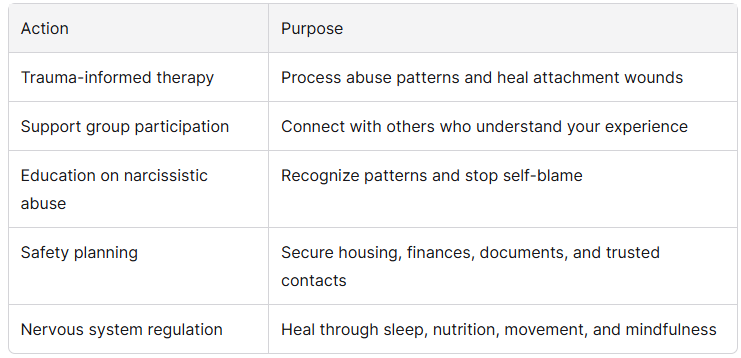
For those in co-parenting situations, consider consulting with a family law attorney experienced in high-conflict dynamics. Resources like Judge Anthony’s guidance for abuse survivors can help you navigate custody disputes where your reactions may be twisted into “instability” evidence.
Reclaiming your peace is not about revenge. It’s about choosing a life where your emotions are no longer someone else’s game board. You can break free from this cycle—and you deserve to.
FAQ
Is reactive abuse the same as being an abuser?
No. Reactive abuse describes a situational response to ongoing mistreatment, while an abuser shows a consistent pattern of control, entitlement, and lack of empathy over time. Feeling ashamed of how you reacted doesn’t make you equivalent to someone who systematically provokes, degrades, and controls others. Take responsibility for any harmful actions while recognizing the context of prolonged provocation, and seek support to heal.
Can a narcissist ever stop trying to trigger me?
While individuals can change with deep insight and long-term therapy, most narcissists have little motivation to stop tactics that work for them. Base your decisions on current behavior, not potential. If they’re still provoking and blaming you, protect yourself accordingly. Measure change not by words or apologies, but by consistent, respectful behavior over months and years without manipulation.
How do I know if I’m overreacting or if I’m being triggered on purpose?
Look for patterns over time. Do you feel calmer and safer after interactions, or consistently confused, guilty, and on edge? Intentional triggering usually follows recognizable scripts: pushing known buttons, dismissing your pain, then blaming you for reacting. Journal specific incidents with dates and details to spot patterns and reality-check with a trusted therapist or support group.
What should I do if we share children and I can’t go no-contact?
Use “low-contact” strategies: communicate only about the children, in writing, through structured co-parenting apps where possible. Keep records of manipulative behavior, follow court orders strictly, and avoid emotional discussions in front of the children. Consult with a family law attorney experienced in high-conflict and narcissistic co-parenting dynamics, especially in custody disputes.
Why do I still miss them, even after understanding all this?
Missing them is a normal part of trauma bonding and grief—not a sign the relationship was healthy. You can miss the person you thought they were, the good moments, or the fantasy of who they might become, even while recognizing the truth of the abuse. Practice self-compassion, give yourself time, and focus on building a life filled with safe, mutual, and respectful connections. The bond will gradually loosen as you heal.